
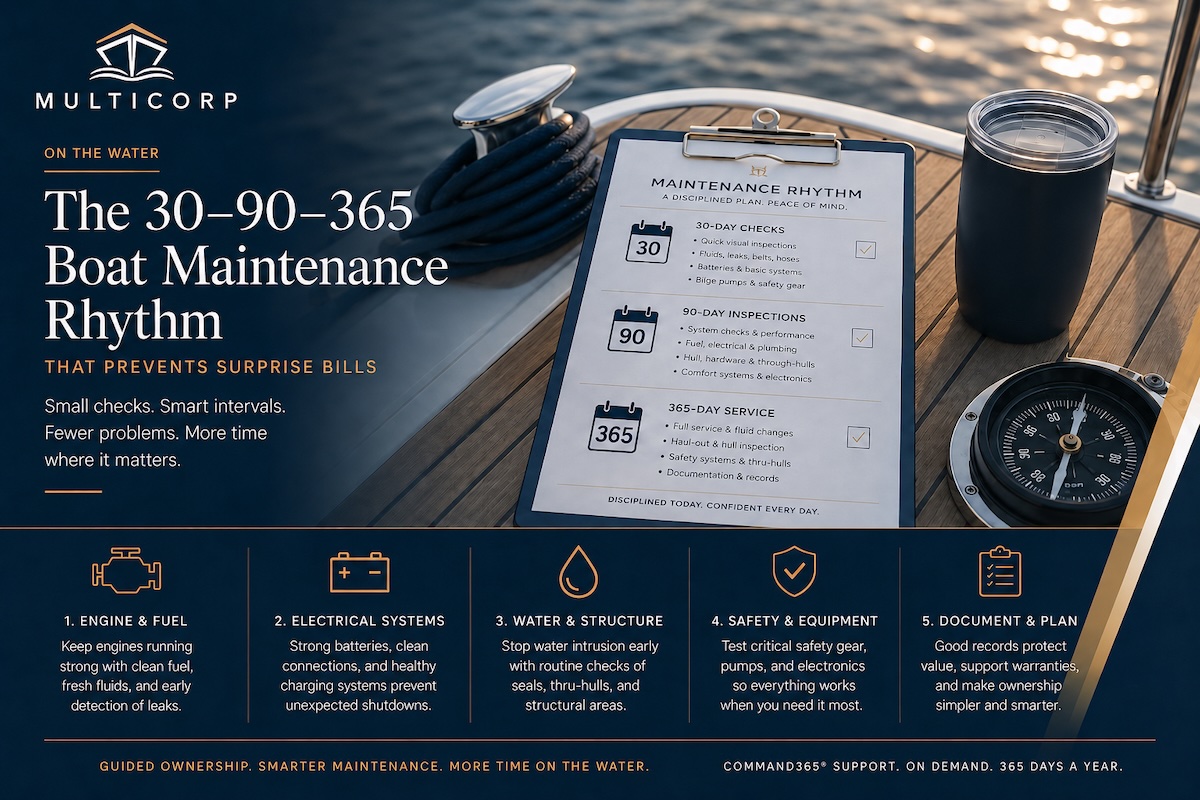
The 30–90–365 Boat Maintenance Rhythm That Prevents Surprise Bills
Most big repair bills don’t come out of nowhere. They come from small things that were visible months earlier—if someone who knows boats was looking.
At MultiCorp Yacht Sales, we use a simple, disciplined cadence that comes out of aviation-style asset management: 30–90–365. It’s a practical rhythm of quick checks and deeper inspections designed to catch problems early, keep you off the service waitlist, and avoid the three most expensive failures owners typically face mid-season.
This isn’t theory. It’s how we manage real boats in the real world.
Why a 30–90–365 Rhythm Works
Boats don’t fail all at once. Systems drift out of spec. Corrosion starts quietly. A clamp loosens. A battery drops a cell.
A predictable maintenance rhythm:
- Catches issues while they’re still cheap to fix
- Reduces mid-season downtime and emergency haul-outs
- Keeps you ahead of parts delays and service availability
- Extends the life of engines, systems, and finishes
- Supports resale value with a clean, documented history
Think of it as “guided ownership”: structured attention at the right intervals, so you spend more days on the water and fewer days watching your boat sit at a yard.
The Three Most Expensive Mid‑Season Failures
Across years of ownership, refits, and client support, three mid-season failures account for a disproportionate share of unexpected bills and lost weekends:
-
Engine and fuel system failures
- Water in fuel, clogged filters, failing pumps, overheating, and neglected oil or impellers.
- These can escalate from a $40 filter to a multi‑thousand‑dollar repair or even engine replacement when ignored.
-
Electrical and battery system failures
- Dead batteries, failing chargers, bad connections, and corroded terminals.
- The direct cost is frustrating enough; the indirect cost is tows, missed weekends, and fried electronics from unstable voltage.
-
Water intrusion and structural damage
- Leaking deck fittings, failed seals, wet cores, and unnoticed hull or transom issues.
- Left alone, these move from a sealant job to cabinetry replacement or major fiberglass work.
The 30–90–365 rhythm is built to intercept these three categories before they turn into “how is this bill five figures?” conversations.
30‑Day: Quick Visual Checks That Save You Thousands
Every 30 days in-season, you want a fast, systematic walk‑through. On a Skamander by Parker Poland, this is straightforward thanks to intelligent layouts and service access, but the same logic applies across platforms.
30‑Day Focus:
-
Engines & fuel
- Check engine oil level and clarity
- Inspect fuel filters/water separators for water or debris
- Confirm no fuel or oil leaks in the bilge or splashwell
- Quick visual on belts and hoses
-
Electrical & batteries
- Confirm main battery switch positions and function
- Look for corrosion on terminals and bus bars
- Verify charger is operating and cooling properly
- Test basic loads: lights, pumps, navigation electronics
-
Bilge & plumbing
- Bilge pumps cycle correctly (manual and float switch)
- No standing water where it shouldn’t be
- Quick check of freshwater system for leaks
-
Deck & hardware
- Test all latches, hinges, and rail bases for looseness
- Look for fresh stress cracks in gelcoat around hardware
- Inspect shore power cord and plug ends for heat or damage
These 30‑day checks are “minutes, not hours.” Done routinely, they reveal 80% of problems while they’re still minor.
90‑Day: System Checks Before Trouble Starts
Every 90 days in-season—essentially, each quarter—you want a more deliberate inspection. This is where you prevent those mid‑season failures from ever getting close to failure mode.
90‑Day Focus:
-
Engines & drive
- Inspect propellers for dings, fishing line, or impact
- Verify engine mounts and steering components are tight
- Check gear lube (if applicable) for color and contamination
- Confirm cooling water flow is strong at idle and cruise
-
Fuel & ventilation
- Inspect fuel lines, primer bulbs, and fittings for softness, cracking, or seepage
- Check fuel tank compartments for fumes and ventilation issues
- Review fuel filter service intervals—change before trouble, not after
-
Electrical & electronics
- Load‑test house and start batteries (or have a shop do it)
- Confirm bonding and grounding points are secure
- Update chartplotter and software; back up waypoints
- Inspect wiring chases where accessible for chafe or DIY “improvements”
-
Water intrusion & structure
- Inspect around windshields, hatches, cleats, and rail bases for signs of leaks
- Open all accessible compartments and check for mold, dampness, or staining
- Check anchor locker drainage and any through‑hulls for flow and corrosion
-
Comfort systems
- Run air conditioning/heating under load; listen for unusual noises
- Inspect hoses and clamps on raw‑water feeds to AC or generators
- Confirm refrigerator, cooktop, and other loads operate correctly underway
At this layer, we’re not just looking—we’re evaluating trends: Is that bilge a little wetter than last time? Is that battery holding less voltage than last month? Aviation thinking applied to boating.
365‑Day: Annual Service as Ownership Insurance
Once a year, every boat deserves a disciplined, nose‑to‑tail inspection paired with scheduled services. This is where you reset the clock.
Core Annual Tasks:
-
Engines
- Oil and filter change
- Gear lube change
- Spark plugs (if due)
- Fuel filters (engine and primary)
- Impeller and water pump service on schedule, not after failure
- Comprehensive engine diagnostics and fault‑code review
-
Hull & structure
- Haul‑out inspection: hull, running gear, trim tabs, through‑hulls
- Bottom paint inspection/repaint as needed
- Detailed inspection of transom, stringers, and high‑load areas for any signs of stress or moisture
-
Electrical & systems
- Full battery health check; replace weak units before they fail
- Test all safety systems: bilge pumps, alarms, CO detectors, horn, navigation lights
- Inspect shore power inlet, breaker panels, and primary connections
-
Plumbing & fittings
- Service seacocks and through‑hulls
- Flush and sanitize freshwater systems
- Inspect and rebed suspect deck hardware if leaks are suspected
-
Documentation
- Update maintenance log: what was done, when, and by whom
- Pair service records with engine hours and usage profile
- Review insurance, registration, and any warranty requirements
On a Skamander, the benefit of robust European construction and vacuum‑infused hulls shows up here: you’re starting from a stronger baseline, but the rhythm still matters. Good design plus disciplined care is what delivers long, trouble‑free ownership.
Command365: When You’d Rather Call Than Guess
A rhythm is only useful if it’s realistic. Many owners don’t have the time—or desire—to chase every system themselves.
That’s why we built Command365, our on‑demand ownership support:
- On your dock or on the water, 365 days a year
- Real people, direct response, no call‑center scripts
- Practical troubleshooting, service coordination, and vendor communication
- Help turning “I think something’s off” into clear next steps
You call. We answer. We solve the problem. You stay on the water.
Ready to Put a 30–90–365 Plan in Place?
Whether you’re running a new Skamander or an existing boat from another builder, a disciplined maintenance rhythm is the simplest way to avoid surprise bills and mid‑season breakdowns.
MultiCorp Yacht Sales can help you:
- Set up a practical 30–90–365 checklist tailored to your boat and usage
- Coordinate service with trusted vendors before they’re fully booked
- Integrate Command365 support so you’re never troubleshooting alone
If you’re ready for a better way to own a boat, contact MultiCorp Yacht Sales to schedule your maintenance planning session and keep your next season running without interruption.