
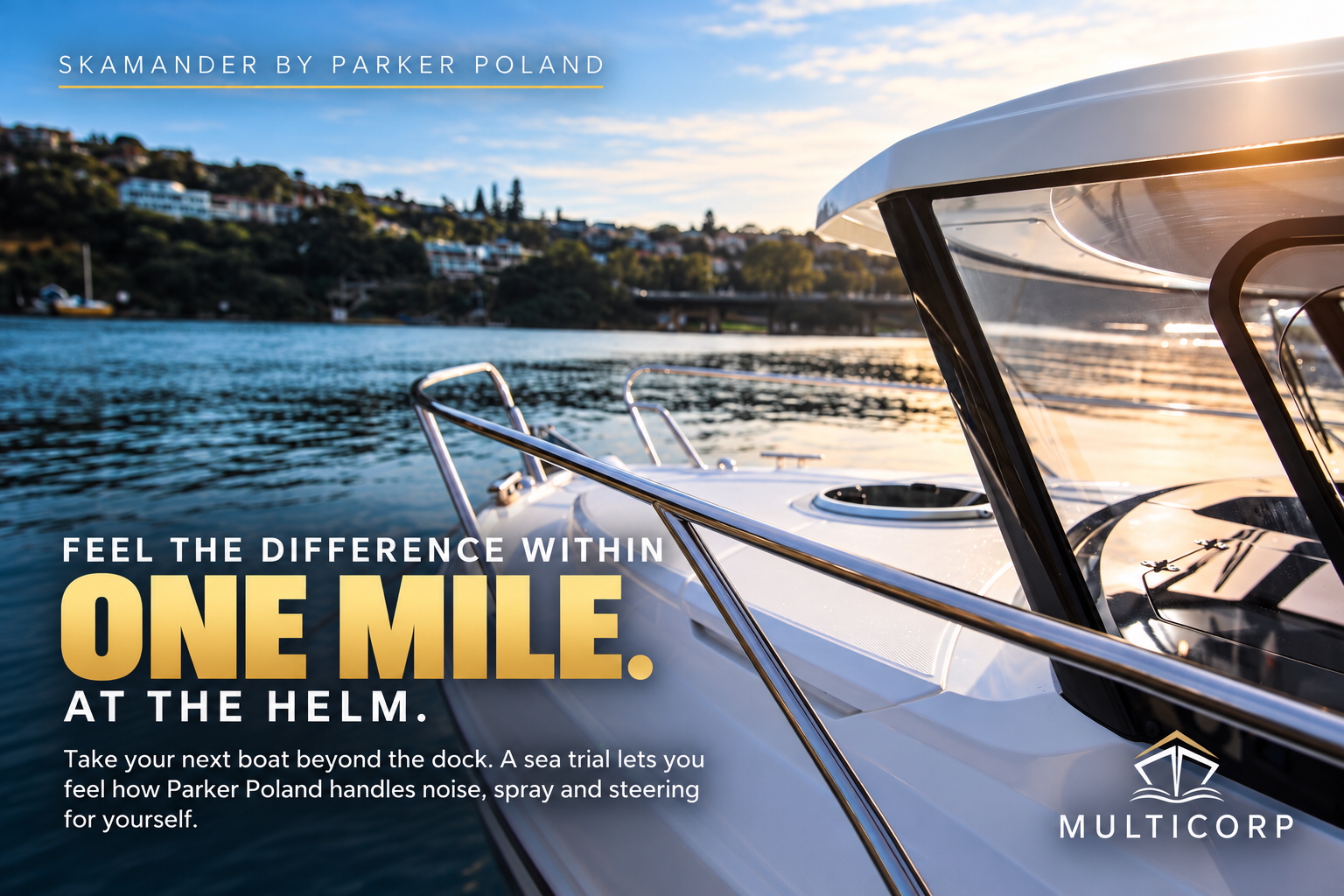
Yes, you can feel good craftsmanship at the helm, often through what you don’t hear or have to work around. A locker lid stays quiet through a wake. The seat supports you without forcing an awkward reach to the throttle. Afterward, the cockpit rinses clean without a lengthy session chasing dirt out of tight corners.
For buyers upgrading from a mass-market boat, those differences matter. A European badge alone doesn’t guarantee them. At MultiCorp Marine, we help buyers select and configure Skamander by Parker Poland boats around how they actually boat. Construction quality earns its value on the water and back at the dock.
A solid ride starts beneath the finish
In a fiberglass boat, reinforcement combined with resin forms the hull’s structural laminate. Hand layup and resin infusion are different ways of producing that composite. Neither process name, by itself, proves that a finished boat is better built.
What matters is the laminate’s design and the structure supporting it. Stringers and bulkheads distribute loads through the hull. Well-executed bonds between structural components help resist unwanted movement as the boat encounters chop. More material isn’t automatically better; it needs to be in the right places.
For the Parker Poland model you’re considering, ask how the hull is reinforced and how its major structural components are joined. Those answers are more revealing than a general claim that a boat is heavily built.
Then listen. A loose latch or flexing panel can add chatter to every wave encounter. Structural stiffness and well-fitted components can reduce these secondary noises. They won’t silence engines or water impact, but they can make the boat feel more composed.
Hull geometry shapes the ride
A fine bow entry can soften contact with short chop. Farther aft, deadrise, the angle of the hull bottom relative to horizontal, influences how the boat meets the water after crossing a wave. Greater deadrise generally softens impacts, with trade-offs in lift and stability at rest.
The important detail is how the hull shape changes along its length. One deadrise figure cannot describe the whole ride, and loading and trim affect the result. A well-built boat can still pound when driven too fast for the conditions.
Skamander by Parker Poland’s emphasis on seakeeping is relevant to Chesapeake Bay cruising and Great Lakes boating alike. Match the particular model to your use, though. Running through steep afternoon chop asks different things of a hull than drifting over an inland-lake fishing spot.
During a trial, look for predictable behavior at your normal cruising speed, not simply an impressive top-speed number.
Helm ergonomics become obvious after an hour
At the dock, sit and stand at the helm. Can you reach the throttle without leaning away from the seat back? Does the wheel position allow comfortable steering with your feet supported?
Check sightlines from your natural driving position. A windshield frame can obscure part of the view, while a display that looks perfectly placed indoors may catch glare outside. Look toward the stern quarters as well as ahead.
Good ergonomics reduce the effort of operating the boat. You spend less time shifting your weight or stretching for a control, leaving more attention for the water. That is a more meaningful upgrade than a larger console with awkwardly placed equipment.
Materials and detailing decide the cleanup
Glossy gelcoat makes a strong first impression. Consistent finish quality around locker openings and neatly finished edges tell you more about attention to detail.
Cleaning effort often comes down to shape. Smooth molded surfaces wipe down readily; narrow channels around hinges collect grime. A low spot without effective drainage can hold water after every rinse. Nonslip texture provides footing, but its pattern also affects how easily dirt washes away.
Look beyond the shine of stainless hardware. Material grade and installation affect durability, while secure backing helps fittings carry their intended loads. Operate latches and inspect accessible fastenings.
Upholstery deserves a practical look, too. Deep seams can trap debris, and cushions that are awkward to remove make drying harder. For family boating or fishing, those details may matter more than an elaborate finish package.
Make the comparison on the water
A useful sea trial tests the boat you might own, rather than an idealized version of boating. Compare boats in reasonably similar conditions and note differences in passenger load and fuel.
- Listen from the cockpit as well as the helm, distinguishing loose gear from fitted components.
- Assess comfort at the cruising speeds you expect to use.
- Notice steering response and whether frequent trim adjustments are required.
- Back at the dock, check whether routine service points are accessible without dismantling furniture.
The worthwhile upgrade combines a reassuring ride with fewer everyday frustrations. If you’re considering a European-built outboard boat, we can help you compare Skamander by Parker Poland models and plan a configuration around the way you boat.