
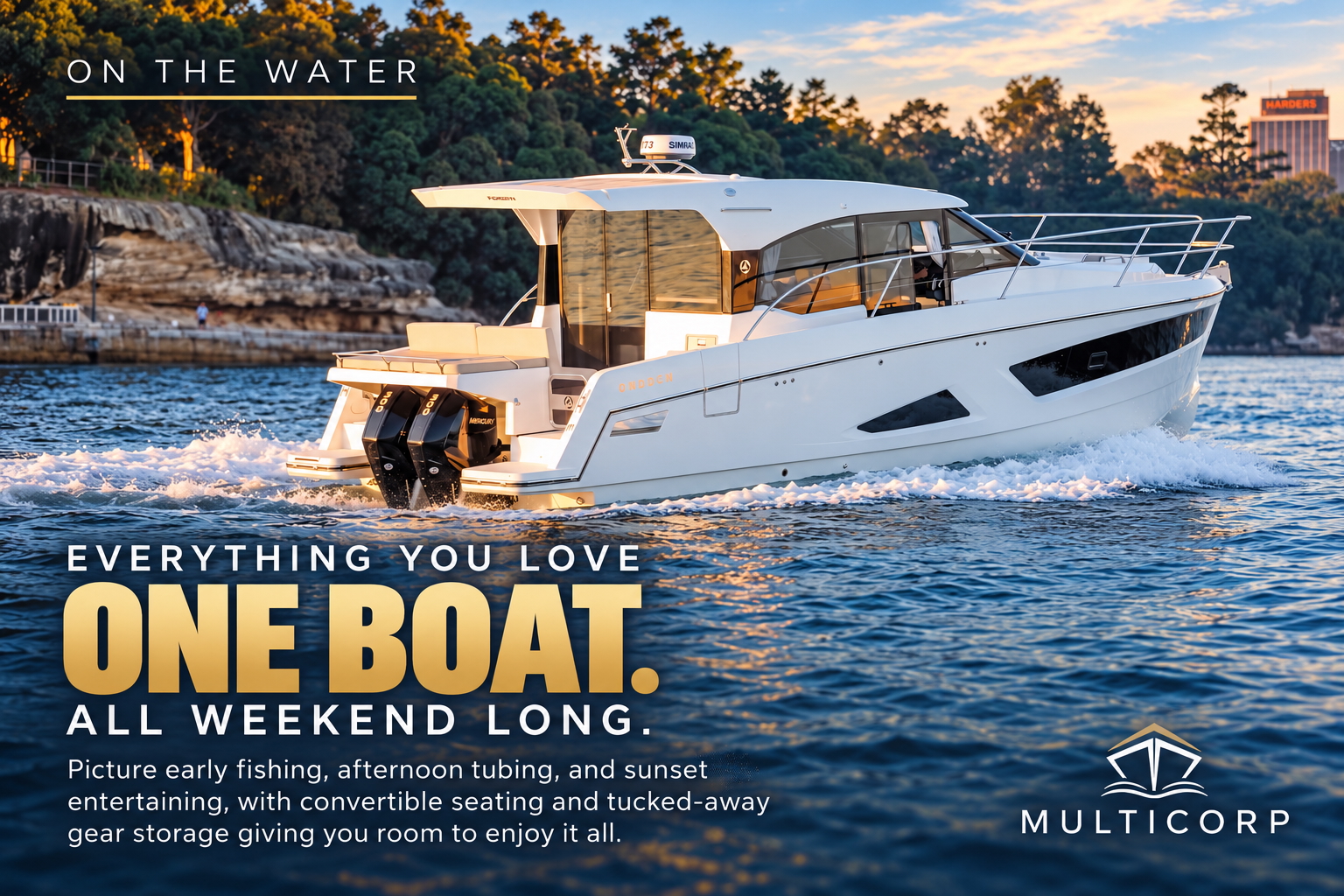
A morning fishing trip can turn into afternoon tubing, with friends joining for a sunset cruise. For an active family, the value of a versatile boat lies in how easily it changes between those plans. If rearranging the cockpit means unloading half the boat, a long equipment list will not make it feel practical.
At MultiCorp Marine, we help families compare the European-built Skamander by Parker Poland range, where versatile layouts are a central part of the appeal. The useful question is how well a particular model fits your family’s routine, not how many activities appear in a brochure.
Start with the outing you take most often
Choose the activity that matters most, then consider how the boat accommodates everything else. Frequent fishing puts a premium on standing room and secure tackle storage. Afternoons with guests make comfortable seating and easy movement through the cockpit more important.
Versatility still involves choices. A dedicated tow boat may be a better fit if producing a specialized wake is the main goal. A dedicated fishing platform may make sense if maximum working space matters more than guest seating. A versatile family boat is strongest when it handles your regular plans well, even if it does not match a specialist at every task.
Make the deck change jobs
When comparing layouts, try every seating conversion rather than just looking at it. A folding bench earns its place when it opens up standing room for fishing, then returns to comfortable seating without a struggle. A removable table can make lunch easier, provided it has somewhere secure to go afterward.
A hands-on walkthrough reveals more than a floor plan:
- Walk from the helm to the swim access with seating in its cruising position.
- Check where fishing tackle and wet tow ropes can be secured away from feet.
- Find the storage space for any table or cushions removed during a layout change.
- Sit in the passenger positions and check handholds and back support.
An open deck should provide clear routes with people and gear aboard. Uninterrupted floor space in an empty boat tells only part of the story. Picture a cooler in place and someone moving aft while another person remains seated.
Judge swim access from the water
A ladder that looks convenient from the dock may be awkward for a tired swimmer. Look at its position relative to the outboard and the route into the cockpit. Consider whether children can reach the ladder comfortably and whether an adult can help without blocking the boarding area.
For watersports, confirm that the specific boat and engine configuration suit your intended activity. Check the manufacturer’s guidance and approved towing arrangement rather than assuming a convenient attachment point is suitable.
Keep engines off while anyone is swimming near the boat or using the ladder. Easy boarding and sensible separation from the outboards matter more than the appearance of a swim platform.
Balance open space with useful shelter
Your home waters help determine the right layout. Chesapeake Bay cruising can begin with a cool morning and finish in afternoon heat. On the Great Lakes, protection from wind and spray may carry more weight. For inland lake afternoons, shaded seating between swims may be the bigger priority.
A pilothouse is worth considering when shelter would make more outings comfortable. An open day-cruising layout may suit a household that mainly heads out in fair weather. Compare usable outdoor space with the protection your family will appreciate, rather than assuming the most enclosed or most open boat is automatically the best choice.
Keep the ownership equation honest
One adaptable boat can mean one berth or storage arrangement and one vessel’s maintenance schedule instead of several. That can simplify ownership, but equipment choices still affect the work and expense involved.
Outboards require scheduled service, and the hull needs regular care. As you configure a boat, weigh each option against how often you will use it and the upkeep it adds. Equipment that serves your main activities deserves more consideration than something included for an unlikely once-a-season outing.
We help buyers work through those decisions with model selection and vessel configuration, alongside ownership planning. For qualifying customers, our Command365 program provides year-round service coordination and maintenance guidance, with warranty assistance and dockside support.
Tell us what your family enjoys most and where you plan to boat. We can help you compare Skamander models and configurations around those plans, including the details that make switching from fishing to family time easier.