
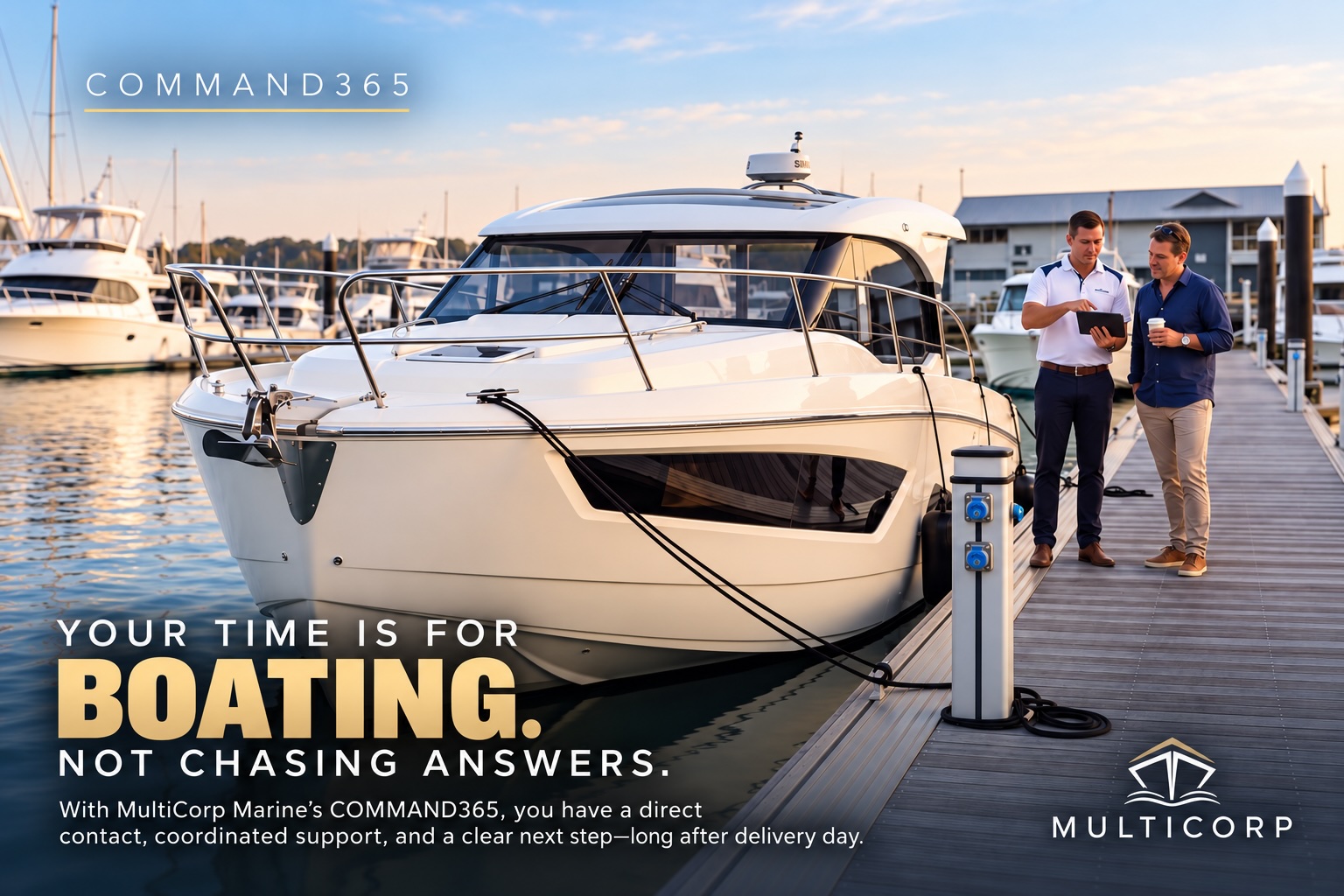
A delayed part can change a weekend on the water. An unanswered message leaves you wondering whether to keep a marina reservation or cancel a family outing. The repair may take time, but you should not have to chase someone simply to understand where things stand.
Good post-sale communication makes premium boat ownership more manageable. It gives you a named contact and a realistic next step, even when the technical answer is not yet clear. Here is what to look for before choosing an ownership partner.
A response window you can plan around
“We respond quickly” is an intention, not an expectation you can use. Ask for the normal acknowledgment window, expressed in working hours or business days, and find out how weekends and holidays affect it.
An acknowledgment is different from a diagnosis. The first reply can be brief: your request has reached the right person, and this is what happens next. Establishing the cause of a fault may require an inspection, but confirming receipt does not require a completed technical answer.
Agree on the communication channel as well. Where do routine maintenance questions go? How do you flag a fault that could affect safe operation? Ask how urgent service concerns are handled outside normal hours rather than assuming every text is monitored around the clock.
A service timeline with visible milestones
An inspection appointment is not a repair completion date. A useful timeline separates the two.
Diagnosis may reveal a different repair scope, while a parts order may depend on warranty authorization. After the repair, a functional check or sea trial may still be required before handover. Those steps explain why “the work is finished” and “the boat is ready” can mean different things.
Look for a clear distinction between confirmed dates and estimates. If a supplier has not confirmed shipping, an honest “we do not have that date yet” is more useful than an unsupported promise. The service team can still explain who is following up and when you will hear more.
Costs deserve the same clarity. Know what work you have authorized and when further approval will be requested. A warranty claim under review is not the same as confirmed coverage.
Updates that help you make decisions
“Still working on it” may be accurate, but it gives you little to work with. A useful update explains what has changed and how it affects the schedule. If something remains unresolved, that belongs in the message too.
A hypothetical update might read:
Diagnosis is complete, and we are waiting for confirmation of the replacement part’s ship date. We cannot confirm the boat will be ready Friday. We will update you by 2 p.m. tomorrow, even if the shipping status has not changed.
That message does not solve the delay. It does let you reconsider Friday’s plans without chasing an answer.
The next check-in should not depend on good news. Keeping an agreed update time, even with no change in status, tells you the request is still being managed.
A clear way to escalate
Even a well-organized service process can stall. Ask who you contact if a promised reply does not arrive or your primary contact is unavailable.
A practical escalation path identifies a backup, such as a designated service lead or manager. It does not leave you guessing which employee might help or sending duplicate requests to several people.
Keep the original request and promised follow-up date in the same message thread. That gives a second contact enough context to act without asking you to reconstruct the issue.
Test the relationship before you buy
A conversation about a delayed-parts scenario can reveal more than a broad promise of excellent service. Ask a prospective partner to walk you through what would happen, then clarify:
- Who owns my request when another service provider is involved?
- What acknowledgment window can I normally expect?
- How are update times agreed, especially when completion dates remain uncertain?
- Who is my backup contact if a commitment is missed?
Location belongs in this discussion. Whether your boat stays at a Chesapeake Bay marina or on an inland lake, the relevant question is how support will be coordinated where you actually keep it.
At MultiCorp Marine, we include ownership planning in the buying process. For qualifying customers, our Command365 program provides year-round service coordination and maintenance guidance, along with warranty assistance and dockside support. Discussing eligibility and the support available for your boating plans helps put the ownership picture alongside the boat itself.
If you are considering a Skamander by Parker Poland, talk with us about ownership planning and Command365 eligibility as part of model selection, while those answers can still inform your decision.